
There are so many reasons why it’s a more ethical choice to buy or rent a Linux based used laptop or desktop versus buying new. It’s better for the environment, better for your budget, and better for the local economy.
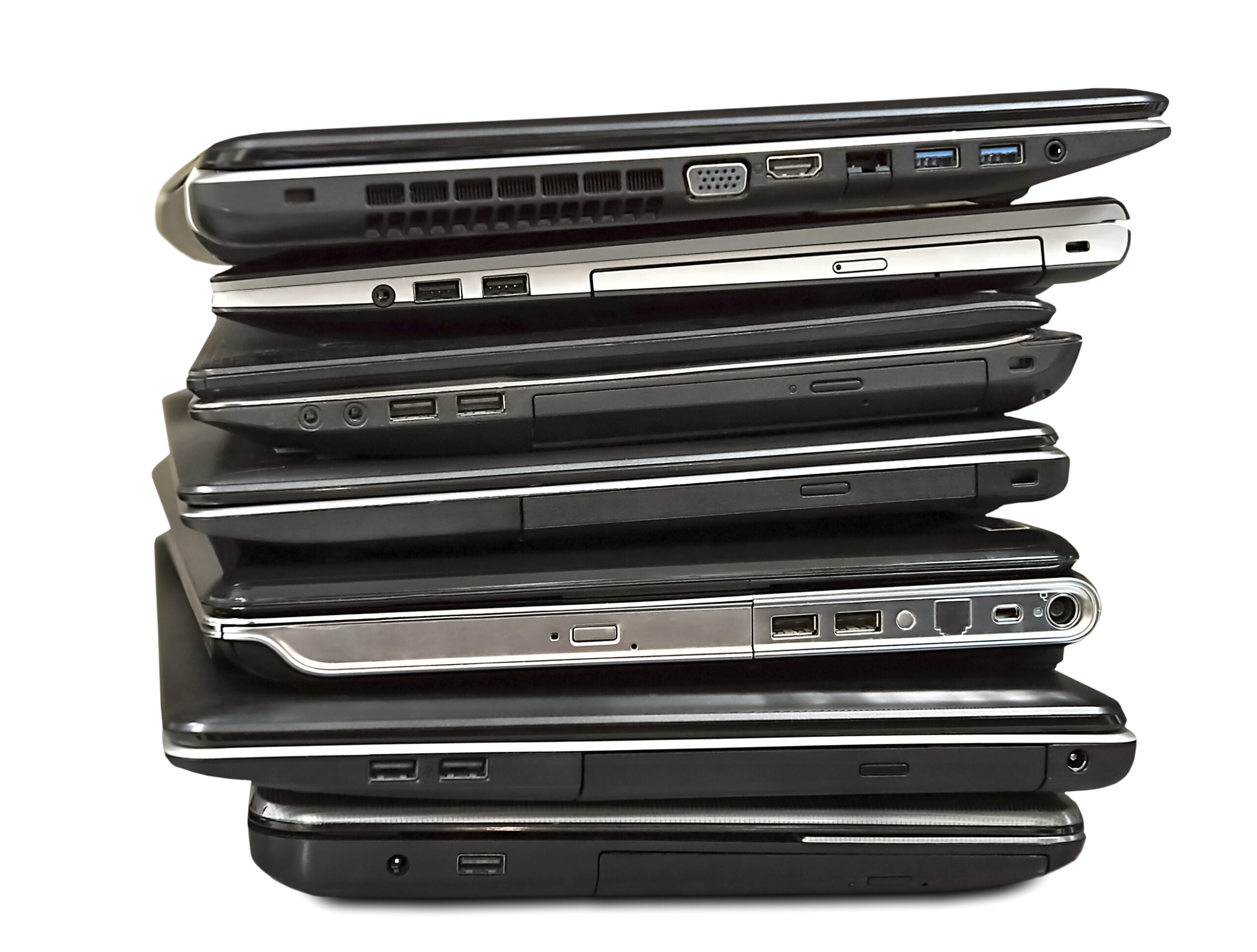
The environmental case
Most of a computer’s carbon footprint is created before you ever switch it on. Mining the raw materials, manufacturing the components, and shipping the finished device account for the majority of its lifetime emissions, whether it’s a laptop or a desktop. A comparative life cycle study of both found that manufacturing contributed the largest share of emissions for each, followed by use.
Desktops carry a heavier footprint overall, largely down to higher energy use while running, but the same principle applies to both: the environmental cost is mostly paid up front, at the point of manufacture.
Buying new means triggering that footprint all over again. Keeping an existing desktop or laptop in service, or buying a refurbished one, avoids it. One estimate puts the saving at up to 85% of the carbon footprint of an equivalent new device.
Refurbishment isn’t the compromise option. It’s the more responsible one, for any type of machine.
Why a computer gets binned under Windows, but not under Linux
Did you know that the biggest threat to keeping a computer performing well isn’t its age or specification, it’s the operating system and software?
The most telling recent is example is that when Microsoft announced Windows 11 requires a TPM 2.0 security chip to run, millions of machines that were otherwise working perfectly well were no longer supported. This is not because they’re broken, but because they were a little older.
When Windows 10 support ended in October 2025, the analyst firm Canalys estimated that 240 million PCs didn’t meet these requirements and fell out of support as a result, roughly a fifth of all Windows 10 devices in use.
To be clear, its not old laptops that are incompatible with Windows, it’s Windows that is incompatible with older laptops.
That same incompatibility makes those machines harder to refurbish and resell, because a computer that can’t run current Windows is far less attractive on the second-hand market.
A lot of that hardware ends up unused, exported, or improperly processed, not because it’s failed, but because the software it’s asked to run is bloated, inefficient, incompatible, or all three.
Linux doesn’t work that way. There’s no TPM requirement and no bloatware competing for memory and processing power.
If the hardware runs, Linux runs, and a lightweight desktop environment will often run comfortably on hardware that Windows 11 refuses outright, whether that’s a laptop that’s been knocked about a bit or a desktop tower that’s been sat under a desk for a decade.
So the same machine can be two very different things depending on the software decision made about it. Under Windows, it’s obsolete. Under Linux, it’s a perfectly capable, perfectly sustainable machine with years of life left in it. That’s not a technical curiosity, it’s the difference between a device being discarded and a device staying in use.
The cost savings
The environmental case and the financial case point in the same direction here, which makes this an easy argument to make.
Refurbished hardware costs less to buy than new so there are immediate cost savings when you need laptops or desktops for your users.
Because Linux carries no licence fee and no artificial hardware cut-off, a refurbished machine running Linux isn’t on a countdown to replacement the way a Windows device is. You’re not paying for a Windows licence, and you’re not facing a forced upgrade cycle driven by a company’s own hardware requirements rather than the condition of the machine itself.
For many of the organisations we work with – charities, co-operatives, and community groups often running on tight budgets – that matters. It’s the difference between reliable equipment that lasts and equipment that quietly becomes a recurring cost every few years because the software running on it has decided the hardware is no longer welcome.
Choosing refurbished shouldn’t mean choosing risk, so we protect the investment as well as the device: Every unit we supply can come with an optional third party warranty, including a next business day swap-out option, meaning a hardware fault never turns into extended downtime or an unplanned cost for your users.
Keeping it local
There’s a benefit to where the spend ends up, not just how much of it there is.
Buying refurbished from us keeps that money circulating in the local economy, rather than adding to the revenues of Dell, HP, Lenovo and the like. It’s the same principle behind choosing open source over the large proprietary vendors: spending with people and organisations who reinvest locally, rather than sending it to a global balance sheet.
For organisations who want their users to compute ethically, sourcing a Linux based desktop or laptop has never been easier.
LAPTOPS
Desktops